What changes for residents: California communities that rely on imported water could see fewer local interruptions when state deliveries are scheduled to refill groundwater basins — if a new bill becomes law. The measure aims to prevent local governments and public agencies from blocking those deliveries when a state-approved control plan is in place, a response to disruptions tied to the spread of invasive golden mussels.
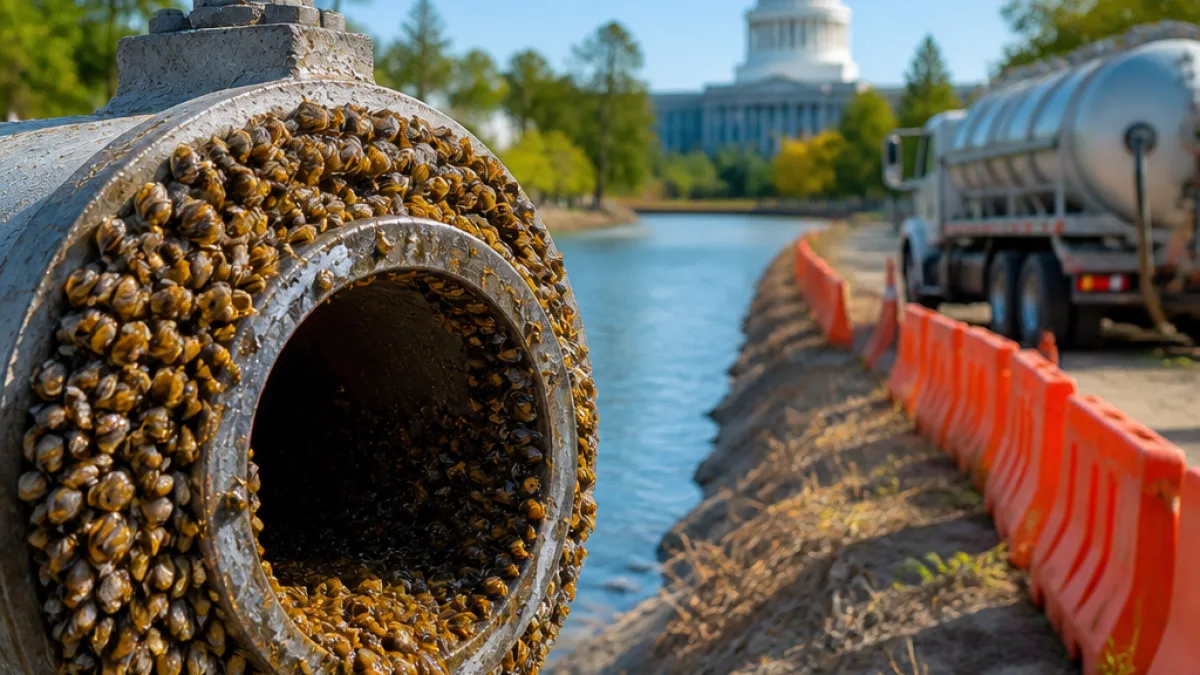
The campaign against a tiny invader is reshaping how water is managed across the state. The golden mussel, a thumbnail-size mollusk native to Southeast Asia, was first found in California near the Port of Stockton in 2024 and has since raised alarm for its ability to reproduce rapidly and clog pumps, pipes and screens that move water.
Political friction and policy response
The Metropolitan Water District of Southern California, which supplies water to Los Angeles, Orange County and other parts of the region, voted Tuesday to back Assembly Bill 1894. The bill, authored by Democratic Assemblymember Blanca Rubio, would bar cities, counties and other public agencies from stopping imported-water deliveries used to recharge groundwater basins — provided those deliveries follow a state-approved control plan.
"little pesky creature"
Rubio told state senators last month that Los Angeles County was the only one of California's 58 counties to take the "drastic measure" of shutting off imported-water deliveries, a move she framed as exceptional. Los Angeles County's Department of Public Works restricted some State Water Project deliveries in 2025 because of concerns that golden and quagga mussels could enter parts of the county's flood-control system. That action affected water deliveries to Burbank and the Upper San Gabriel Valley Municipal Water District.
Who supports and who resists
Supporters of AB 1894, including the Metropolitan Water District, argue restricting local agencies' authority to block deliveries could protect communities from losing critical supplies needed to replenish underground aquifers. Opponents worry the bill would limit local control and potentially force water agencies, especially in agricultural areas, to accept deliveries that present infrastructure or ecological risks.
- Support: Metropolitan Water District of Southern California; bill sponsor Assemblymember Blanca Rubio.
- Local action that sparked the bill: Los Angeles County Department of Public Works restricted some State Water Project deliveries in 2025 over mussel concerns.
- Impacted agencies: Burbank, Upper San Gabriel Valley Municipal Water District and other State Water Project contractors.
Infrastructure and ecological stakes
Golden mussels adhere in large numbers to hard surfaces and are easily transported through the state's interconnected water system. Their spread threatens the mechanical systems that move water, increasing maintenance costs and risking interruptions. The debate highlights a tension between regional supply reliability and localized protection of facilities and ecosystems.
| Item | Example from coverage |
|---|---|
| First California detection | Near the Port of Stockton, 2024 |
| Legislative response | AB 1894 by Assemblymember Blanca Rubio |
| Regional supporter | Metropolitan Water District of Southern California |
Legislators and water managers face a narrow set of choices: craft statewide standards to allow necessary water transfers while protecting local infrastructure, or preserve local veto authority and accept potential interruptions to groundwater recharge. The coming hearings on AB 1894 will test whether California can adopt a uniform approach to a species that does not respect jurisdictional boundaries.
State residents dependent on imported water should watch for decisions from the Legislature and their local water boards. Agencies may also update operational plans and maintenance schedules as they adapt to the biological threat.