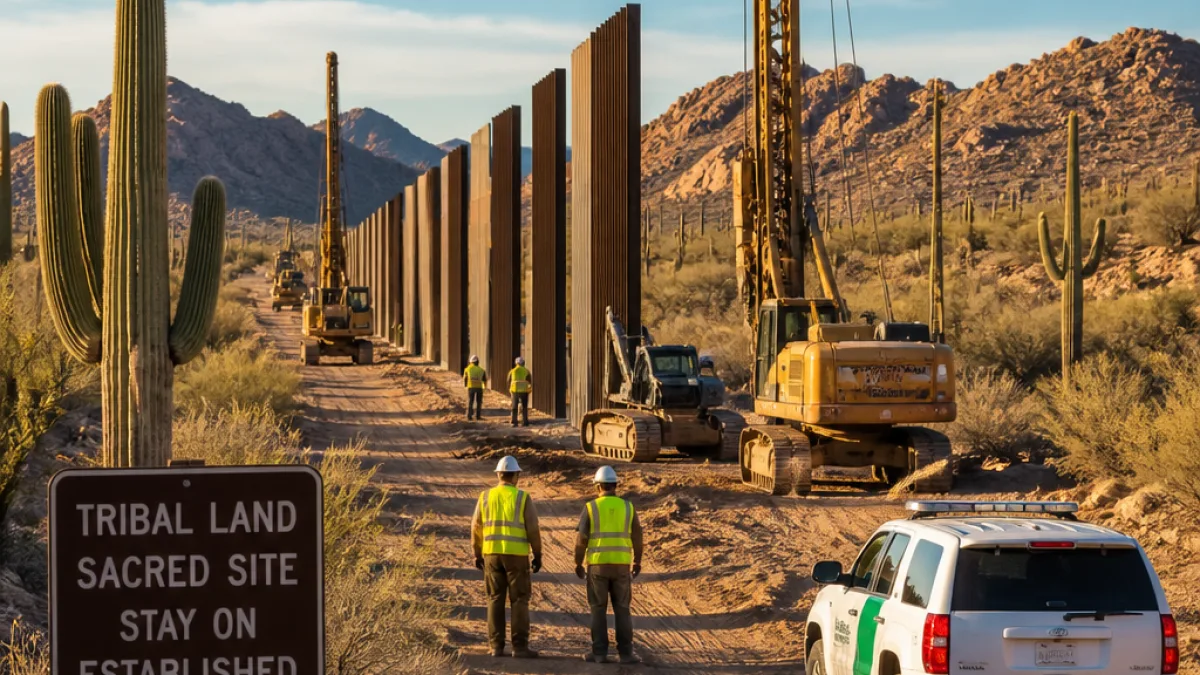
PHOENIX — Federal agents and contractors moved onto land held by the Tohono O'odham Nation early this week to begin construction of a stretch of border barrier in southern Arizona, the tribe and U.S. officials said, escalating a dispute over tribal sovereignty, sacred sites and federal immigration policy.
What happened on the ground
The Tohono O'odham Nation said roughly 20 U.S. Customs and Border Protection officers accompanied contractors onto reservation land to begin work. Nation officials released drone video they say shows about 14 vehicles and an industrial drill at one of the sites where crews have started to operate.
CBP has defended the project as an effort to close a known smuggling corridor and to fill a security gap along the border. The segment is part of a broader federal initiative to beef up physical barriers and technology along the U.S.-Mexico border.
Tribal objections and legal backdrop
Nation leaders say the operation violates tribal codes and amounts to trespassing on sovereign land. The Tohono O'odham, whose membership totals about 37,000 and includes members who live on both sides of the international border, sued the federal government in June in an effort to stop construction.
“significant devastation”
In its lawsuit the tribe argued the barrier would bring what it called "significant devastation" to tribal lands, including damage to mountain peaks and other features the nation regards as sacred. A federal judge this month permitted the government to proceed, but the tribe maintains the construction infringes on tribal authority and cultural sites.
Project scale and federal goals
The work in Arizona is part of a larger federal program the administration has estimated at $46 billion. Plans include 30-foot steel bollard walls, vehicle barriers and enhanced surveillance technology intended to deter undocumented crossing and smuggling.
| Item | Figure |
|---|---|
| Tohono O'odham membership | 37,000 |
| Federal border program cost | $46 billion |
| Planned wall height | 30 feet (steel bollards) |
Local impact and broader context
For residents of the nation and nearby communities, the dispute raises immediate concerns about access, cultural preservation and safety. Tribal leaders warn that construction equipment and barrier placement could alter landscapes and access routes used for generations. Environmental groups and private landowners elsewhere along the border have raised similar complaints about property rights and damage to sensitive habitats.
- Nation officials released drone footage showing federal vehicles and drilling equipment at the site.
- A federal court allowed the government to move forward earlier this month.
- The construction is tied to a broad federal border-security funding package.
This clash in southern Arizona is a flashpoint in ongoing tensions between federal border enforcement priorities and tribal sovereignty. As crews continue work, the dispute is likely to draw further legal challenges and public scrutiny, particularly from advocates concerned about cultural and environmental harm. Local voices will be watching to see whether the government will alter plans to address tribal objections or press ahead with construction despite those protests.
Diego Ramos, News Block