SACRAMENTO — California’s 2026-27 budget includes targeted funding to shore up food access and support small farmers after federal reductions to the Supplemental Nutrition Assistance Program forced state leaders to step in.
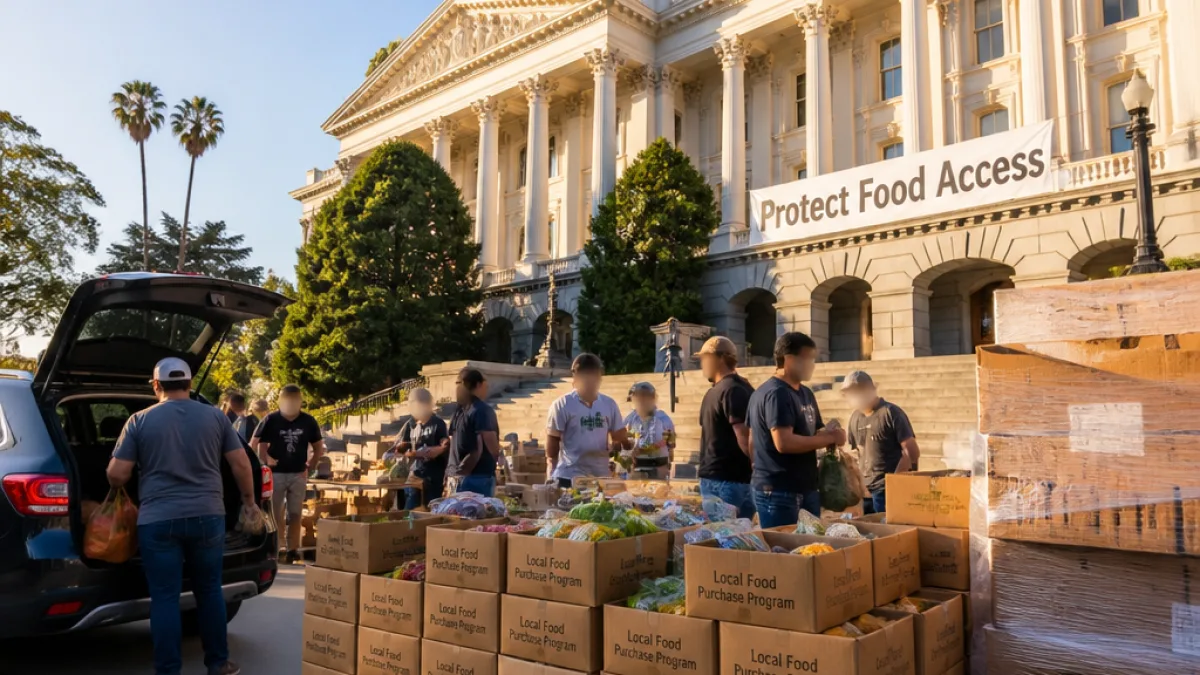
Gov. Gavin Newsom and the Legislature allocated parts of the state’s $351.7 billion spending plan to preserve programs that would have otherwise folded, including a partial state takeover of the Local Food Purchase Assistance Program that had been cut off by the U.S. Department of Agriculture.
What changed for residents
The budget channels hundreds of millions of dollars to food banks, small-scale growers and other food assistance efforts. Advocates said those dollars will keep food on shelves and maintain purchasing contracts that help small and culturally specific producers sell directly to community organizations.
- Local Food Purchase Assistance Program: State funding picks up part of this defunct federal initiative, helping regional food hubs and small farmers who sell to food banks.
- Food banks and assistance: Significant allocations were made for food distribution networks that serve low-income Californians.
- Immigrant support: Advocates noted the budget did not expand targeted assistance for immigrant households, who face growing vulnerability after federal cuts.
Why the budget mattered this year
Food policy experts and advocates framed this year’s state budget as consequential because federal cuts under President Donald Trump’s administration — notably reductions to SNAP tied to H.R. 1 (the Big, Beautiful Bill) — are expected to leave hundreds of thousands of Californians with less federal assistance. SNAP, called CalFresh in California, provides monthly benefits used to purchase groceries at authorized retailers.
The Local Food Purchase Assistance Program, launched at the federal level in 2022, had been a key conduit connecting small and socially disadvantaged farmers to food assistance organizations. In practice, the program helped food hubs aggregate produce from multiple small growers so it could be acquired at scale by schools, pantries and meal programs. Without state intervention, that supply chain would have been interrupted.
| Program | Recent change |
|---|---|
| Local Food Purchase Assistance Program | Partially funded by state after USDA cut funding |
| Food banks and assistance programs | Hundreds of millions allocated in the state budget |
| Immigrant-targeted food aid | No major new statewide expansion in this budget |
Advocates welcomed the state’s response but said it fell short in some areas. While the budget preserved critical lines of support for many residents and for smaller-scale growers, groups representing immigrants and advocates for expanding eligibility said the measures did not go far enough to make up for federal retrenchment.
State and local officials argued the investments will keep distribution networks intact and preserve market opportunities for farmers who produce culturally important foods for their communities. Those contracts were especially valuable for growers identified as socially disadvantaged, who often lack the volume or infrastructure to sell into larger institutional markets without aggregation by food hubs.
For Californians relying on CalFresh, the immediate changes are less direct: benefits continue to be issued under existing federal rules, but advocates warn that lower overall federal funding could mean fewer resources available over time, increasing demand on state and nonprofit providers.
Lawmakers and service providers say they will monitor need and push for further measures to shore up access to food, especially for communities that remain ineligible for federal programs. For now, the budget represents a substantial, if partial, state response to a shifting national policy environment.
— Reporting from Sacramento