Decision in 1965 reshaped downtown, and the debate continues
On July 14, 1965, Alexandria's Board of Architectural Review for the Old and Historic Alexandria District signed off on a design for what would become Market Square: an open plaza with a fountain and a subterranean parking garage. The approval was part of a broad urban renewal program that cleared six worn commercial blocks in downtown Alexandria and erased much of the layered marketplace that had sat near City Hall for generations.
The work that followed was decisive. Dozens of early buildings along King, North Royal and North Fairfax Streets were demolished, and the market stalls clustered around City Hall — a jumble that had grown largely invisible to the surrounding streets — were removed. Supporters at the time said the city needed an open gathering space and the attendant infrastructure; critics warned something valuable was being lost.
"The decision was part of a sweeping urban renewal project aimed at revitalizing six deteriorated commercial blocks in the downtown area."
New study brings buried history back into view
More than six decades later, a 242-page documentary study published last month by the Office of Historic Alexandria — funded by a Commonwealth History Fund grant — has cataloged what stood on the block before the 1965 clearances. The research found at least 50 slave sales occurred on the Market Square block between 1749 and the Civil War, evidence that had been largely obscured when the midcentury renewal removed the physical context for those events.
- 1965 — Board approved the plaza, fountain and subterranean garage.
- At least 50 — slave sales identified on the site between 1749 and the Civil War.
- 242 pages — length of the recent documentary study by the Office of Historic Alexandria.
Construction and interpretation collide
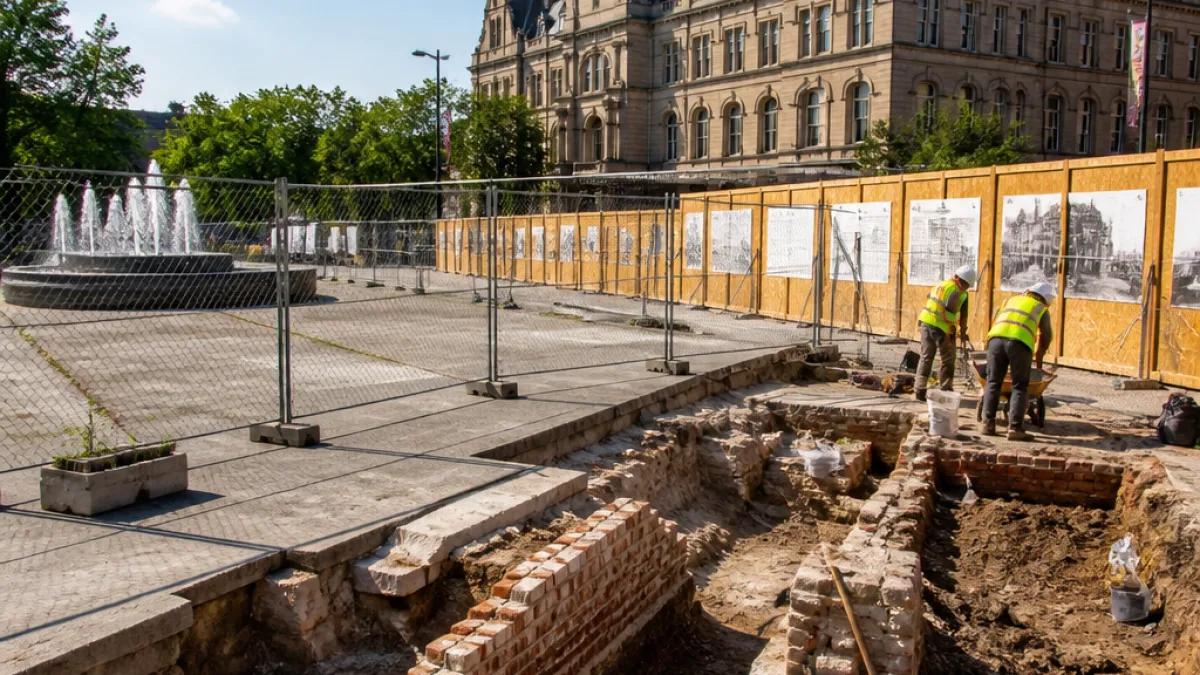
That block is under construction again as the city renovates City Hall and Market Square — the first major intervention there since the urban renewal era. Officials commissioned the recent study specifically to inform how the city will interpret and present the site going forward. For residents, the work is a reminder that public spaces carry layers of meaning: civic pride and everyday gathering, but also stories of displacement and commerce that the city has not always acknowledged.
| Year | Event |
|---|---|
| 1749–Civil War | At least 50 slave sales took place on the block |
| 1965 | Board approved plaza, fountain, subterranean garage; widespread demolitions followed |
| 2026 | New 242-page study published; current renovation of City Hall and Market Square underway |
As Alexandria prepares to reopen the renovated plaza, leaders and residents will face decisions about how to recognize a past that was physically removed in the 1960s. The study offers a fact-based starting point: documentation that can guide interpretive signs, programming, and design choices so that the square's story includes voices and events once erased.
For a city that prizes its historic character, the Market Square episode is a local example of a broader statewide and national conversation about urban renewal, public memory and how municipal projects balance preservation with modernization. The current renovation is not only about brick and mortar; it is also about whether and how the city will make space for the fuller history of the ground beneath its feet.
Officials with the Office of Historic Alexandria released the study to help shape future interpretation. As construction continues, the study's findings are likely to shape plaques, displays and programming that will meet visitors in the redesigned plaza — and shape how Alexandrians understand a familiar civic space whose earlier forms were removed in the name of progress.